62%
Experienced an outage in the past 24 months


ORCA combines local warehouse execution with cloud connectivity, giving businesses the operational resilience to keep critical workflows moving when connectivity is disrupted. Its hybrid architecture brings together reliable execution, automation orchestration, and AI-assisted decision intelligence to support increasingly complex warehouse operations.
 Product Showcase
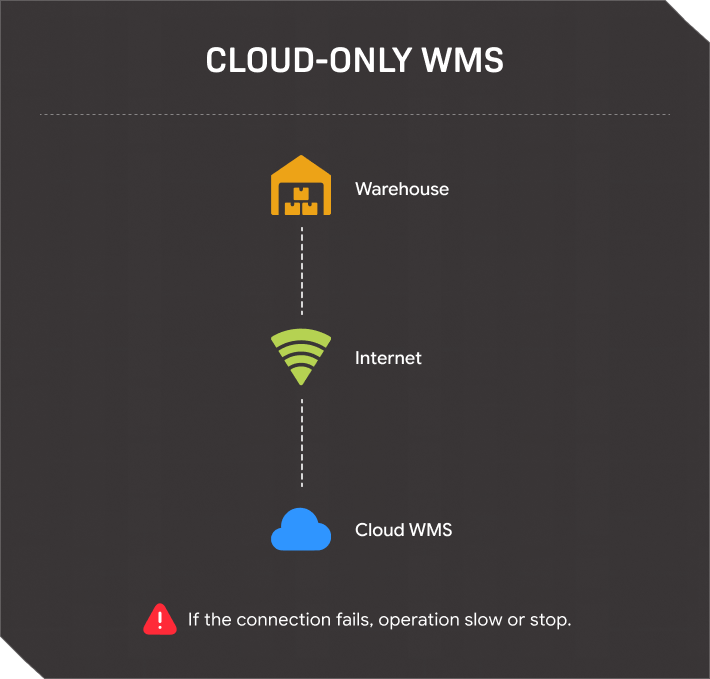
Cloud-based systems offer significant advantages, but warehouse operations depend on reliable, real-time execution. When connectivity is disrupted, critical workflows can be affected, creating delays that impact productivity and fulfillment.
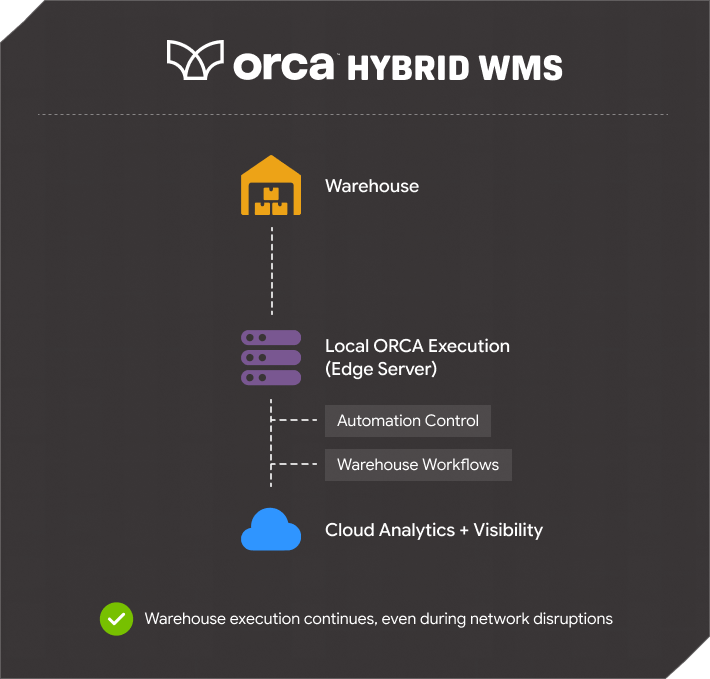
ORCA takes a different approach, combining local warehouse execution with cloud intelligence to deliver greater operational resilience without sacrificing connectivity, visibility, or flexibility.
 Local execution: Keep critical warehouse workflows running during cloud connectivity disruptions.
Cloud intelligence: Maintain access to centralized visibility, analytics, and AI-assisted decision support when connected.
 The Best of Both Worlds
ORCA combines local warehouse execution with cloud connectivity to support reliable operations, responsive automation, and enterprise-wide intelligence. Critical workflows run within the facility, while cloud-based capabilities provide centralized visibility, analytics, and coordination across warehouse operations.

Keep critical warehouse workflows running locally during cloud connectivity disruptions, helping minimize downtime and maintain fulfillment operations.

Coordinate robotics, conveyors, and automated equipment through local execution to support timely decisions and efficient material movement.

Connect warehouse operations through centralized reporting, performance analytics, and visibility across multiple facilities.

Combine local execution with cloud-based capabilities in an architecture designed to support changing operational requirements and warehouse environments.

Turn warehouse data into actionable insights through analytics and AI-assisted guidance that support faster, more informed operational decisions.

Maintain critical execution capabilities locally, reducing reliance on continuous cloud connectivity for day-to-day warehouse operations.
 Hybrid Architecture
 Warehouse Resilience Research
Warehouse downtime is more than a technical inconvenience. It can disrupt fulfillment, delay shipments, and create significant financial consequences. Our warehouse resilience research highlights the frequency of system outages, their operational impact, and the growing importance of reliable warehouse technology.
Core Features
Integrate robotics, AS/RS, AMRs, and manual workflows within one coordinated system.
Manage distributed warehouse networks with centralized reporting and control.
AI-assisted monitoring highlights operational risks and performance opportunities.
Combine local warehouse execution with cloud-based intelligence, coordination, and centralized visibility.
Ideal For
Automated distribution centers
3PL and multi-client warehouses
Retail and e-commerce fulfillment operations
High-throughput logistics environments
Multi-site warehouse networks
 The ORCA Advantage

ORCA maintains critical warehouse execution locally during cloud connectivity disruptions, helping minimize downtime and keep operations moving.
Coordinate goods-to-person systems, robotics, sortation, and traditional warehouse processes through integrated automation orchestration.

Local execution supports real-time warehouse workflows while cloud services provide analytics, visibility, and network coordination.

Embedded AI provides operational insights to help teams identify issues, monitor performance, and make more informed decisions.

AI assistance helps teams troubleshoot issues, find answers, and resolve questions to support productive warehouse operations.

Support multiple warehouses with centralized visibility while allowing each site to maintain local execution capabilities.
Related Blogs & Articles

 Resources
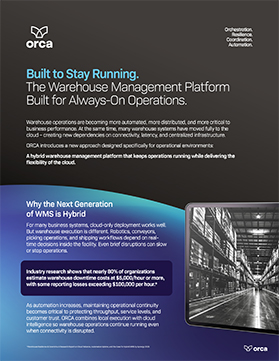
Discover ORCA, Synergy's hybrid warehouse management system designed for always-on operations, combining local execution, cloud intelligence, automation orchestration, and operational resilience.
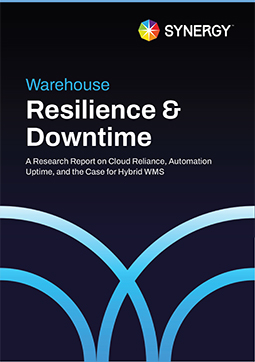
Discover the true cost of warehouse downtime, how disruptions affect operations, and why resilience is becoming a critical consideration in WMS selection.
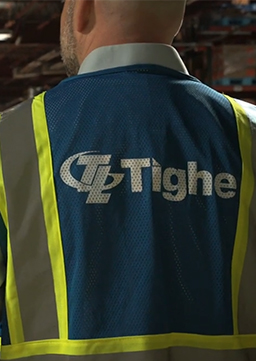
See how Tighe Logistics uses SnapFulfil WMS to streamline warehouse operations, simplify integrations, and deliver more flexible, efficient 3PL services.

 Frequently Asked Questions
ORCA is Synergy Logistics' next-generation hybrid warehouse management system (WMS), designed to combine local warehouse execution with cloud-based intelligence. Its architecture supports operational resilience, automation orchestration, real-time warehouse workflows, and AI-assisted decision-making. ORCA helps businesses manage increasingly complex warehouse operations while reducing their dependence on continuous cloud connectivity for critical execution processes.
Traditional cloud-based warehouse management systems typically depend on continuous connectivity to cloud-hosted services for warehouse execution. ORCA takes a hybrid approach, running critical warehouse workflows locally on compact edge servers while maintaining an active connection to the cloud.
This architecture combines responsive local execution with cloud-based intelligence, analytics, and centralized visibility. If cloud connectivity is disrupted, critical warehouse processes can continue running locally, helping minimize the operational impact of an outage.
No. Unlike traditional on-premise warehouse management systems that often require substantial server infrastructure, ORCA uses compact edge servers located within the warehouse.
These small, purpose-built servers handle critical warehouse execution locally without the complexity of maintaining a traditional on-premise WMS environment. ORCA combines this lightweight local infrastructure with cloud-based services for centralized visibility, analytics, and decision intelligence.
ORCA is designed to maintain critical warehouse execution during cloud connectivity disruptions. Under normal operating conditions, local edge servers and cloud services work together, supporting responsive warehouse workflows, centralized visibility, and AI-assisted decision intelligence.
If the connection to the cloud is interrupted, critical execution processes continue running on the local edge servers rather than waiting for cloud connectivity to be restored. Cloud-dependent capabilities may be temporarily unavailable, but warehouse operations can continue locally, subject to the availability of the facility's infrastructure.
ORCA is designed to deliver responsive warehouse execution by processing critical operational workflows locally, close to the equipment and activities they support.
Rather than depending on continuous communication with a remote cloud server for every execution task, ORCA uses local edge processing alongside cloud-based intelligence and analytics. This approach supports real-time warehouse operations while reducing the risk that connectivity disruptions will interrupt critical workflows.
Yes. ORCA includes native automation orchestration capabilities designed to coordinate warehouse robotics, conveyors, sortation systems, goods-to-person technology, and manual workflows within a unified system.
By bringing automated and traditional warehouse processes together, ORCA helps businesses coordinate material movements, improve operational efficiency, and manage increasingly automated fulfillment environments.
Unlike SnapFulfil, which works with Synergy's SnapControl orchestration platform, ORCA incorporates automation orchestration directly into its WMS architecture.
ORCA incorporates AI-assisted intelligence to help warehouse teams interpret operational data, identify potential issues, monitor performance, and make more informed decisions.
Its capabilities include advanced analytics, operational guidance, and AI-assisted support. These tools help businesses move beyond traditional reporting toward actionable warehouse intelligence, giving teams greater visibility into operations and supporting faster, more informed decision-making.
Yes. ORCA is designed to support multi-site warehouse networks and complex third-party logistics (3PL) operations.
Its hybrid architecture combines local execution at individual facilities with centralized cloud-based visibility and analytics, helping businesses monitor performance and coordinate operations across multiple locations.
For 3PL providers, ORCA also supports multi-client inventory management, customer-specific workflows, billing, and customer portal capabilities, helping logistics providers manage multiple customers within their warehouse operations.
Yes. ORCA is designed to integrate with enterprise resource planning (ERP) systems and other business applications to support the exchange of inventory, order, and operational information.
These integrations help connect warehouse execution with broader business processes, improving data consistency and operational visibility. Specific integration requirements depend on the applications involved, the information being exchanged, and the customer's technical environment.
Both ORCA and SnapFulfil are warehouse management systems developed by Synergy Logistics, but they use different architectures.
SnapFulfil is a proven, configurable cloud-based WMS designed for rapid implementation, flexible warehouse workflows, and efficient fulfillment operations. It can work with SnapControl to coordinate warehouse robotics and automation.
ORCA is a hybrid WMS that combines local execution on compact edge servers with cloud connectivity, intelligence, and centralized visibility. It also incorporates automation orchestration and AI-assisted decision intelligence directly into its architecture.
The right choice depends on your warehouse requirements, operational complexity, automation needs, and long-term technology strategy.
Contact
Looking to improve operational resilience, coordinate warehouse automation, or gain greater visibility across your operations? Our team can help you explore how ORCA's hybrid WMS architecture could support your business.
Tell us about your warehouse challenges, and we'll discuss how ORCA fits your operational requirements and long-term technology strategy.
Synergy Logistics Ltd.

